Google Ads vs Social Media Ads Explained for Beginners
Table of Contents
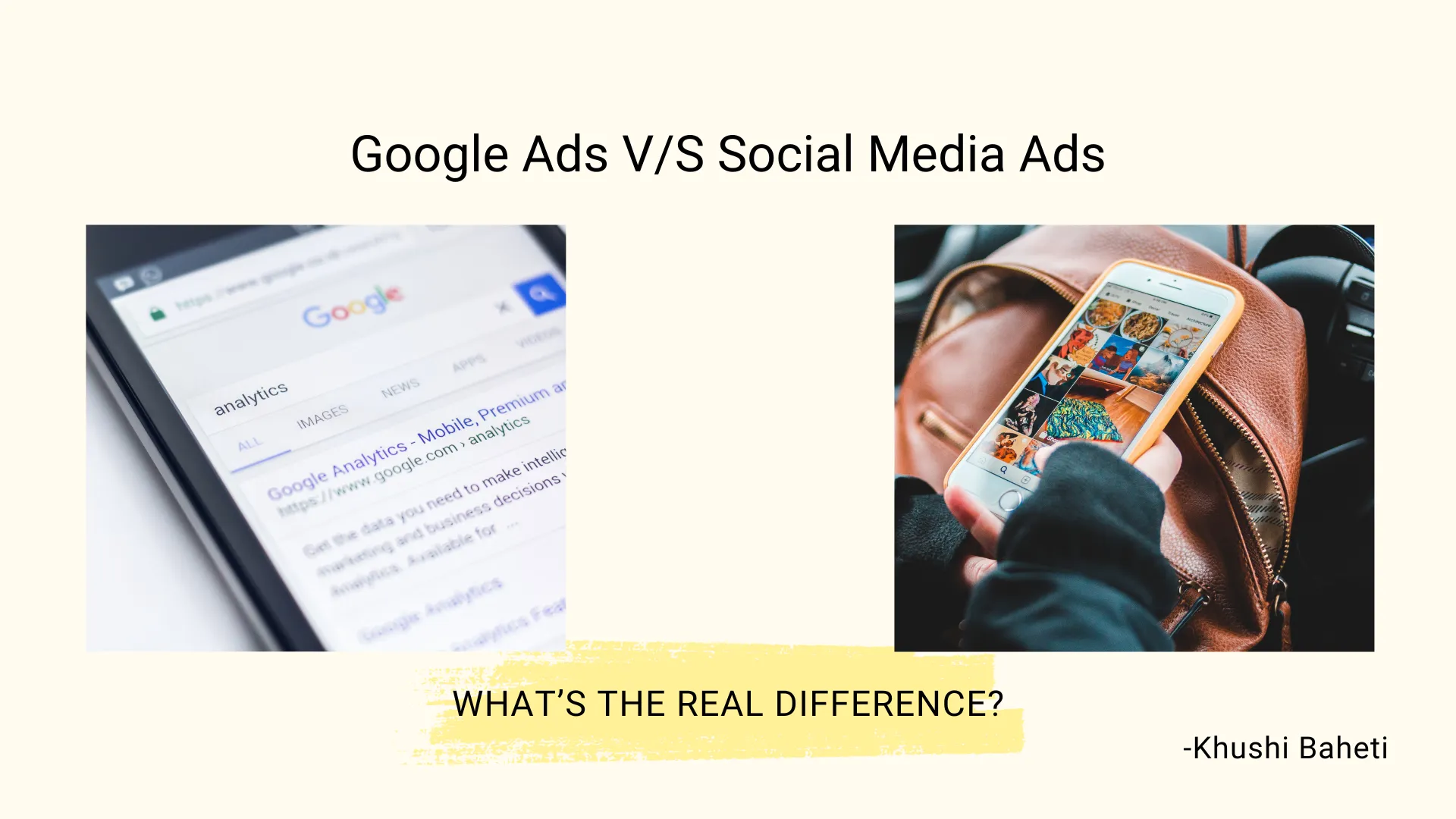
I was confused about whether to use Google Ads vs Social Media Ads. When I first started learning about digital marketing.
Everyone seemed to have different opinions, and I couldn’t figure out which one was “better.”
But after months of studying both platforms, I discovered something important:
The real difference isn’t about which platform is superior—it’s about USER INTENT.
Let me share what I’ve learned and hopefully, it’ll make your decision much easier than mine was.
What is the Difference Between Google Ads vs Social Media Ads?
Here’s the biggest lesson I learned:
Google Ads and social media ads work in completely opposite ways, and understanding this changed everything for me.
GOOGLE ADS TARGETS PEOPLE WHO ARE ACTIVELY SEARCHING FOR SOMETHING.
Think about it—when you type “best running shoes” into Google, you already want running shoes. You have intent. You’re ready to buy or at least seriously considering it.
Social media ads target people based on who they are and what they like.
When you’re scrolling through Facebook or Instagram, you’re not looking to buy anything. Ads interrupt your browsing experience.
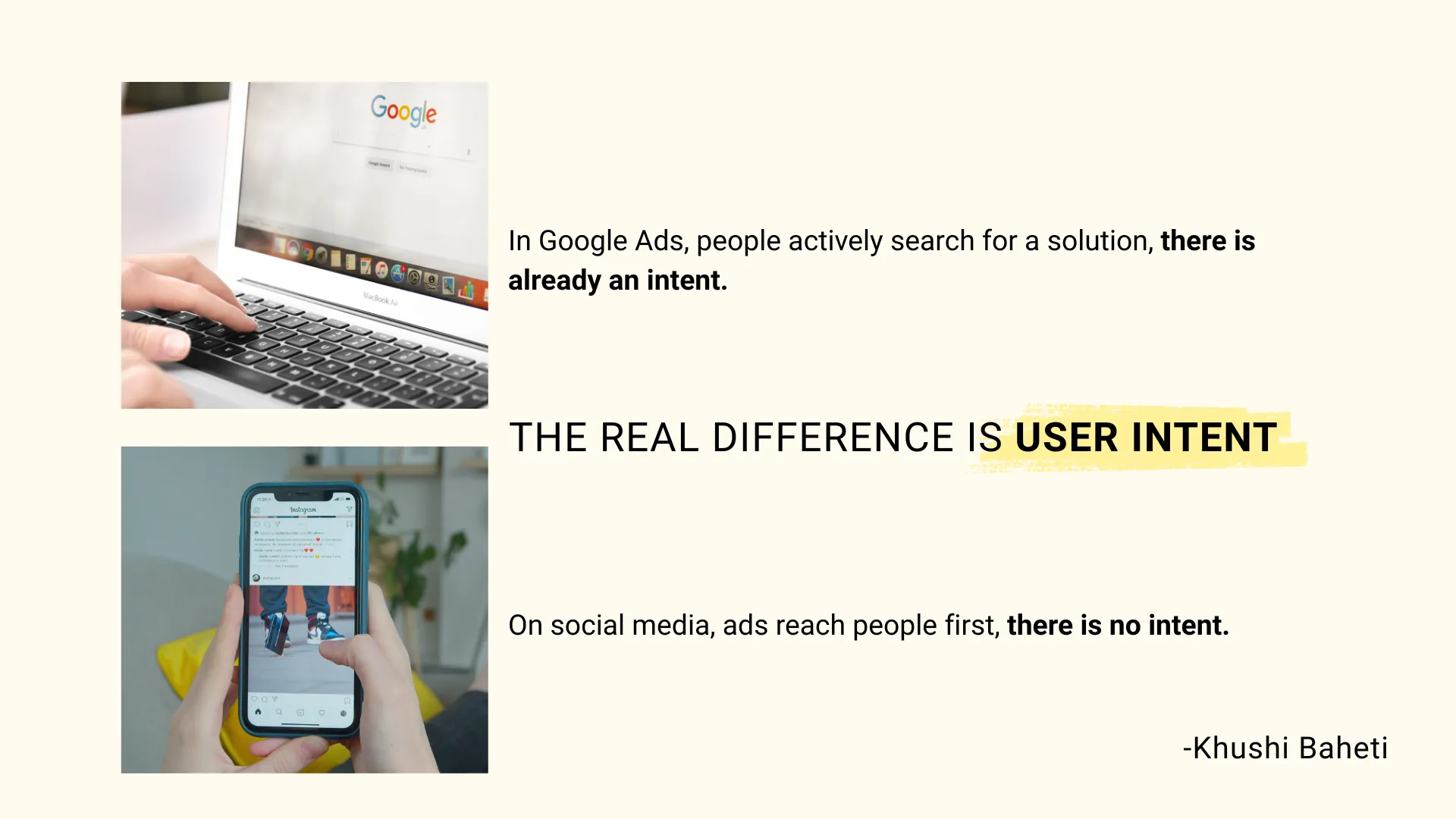
This difference in INTENT is the foundation of everything else. Once I understood this, choosing between platforms became so much clearer.
Google Ads Marketing
When I first experimented with Google Ads, I was amazed at how different it felt from other advertising.
Google Ads is a PULL MARKETING STRATEGY. People are pulling information toward themselves by searching.
They have a problem, question, or need, and they’re actively looking for solutions.
For example, if someone searches “plumber near me,” they probably have a leaking pipe right now. They’re not casually browsing—they need help immediately. If your ad appears at that moment, you’re meeting them exactly when they need you.
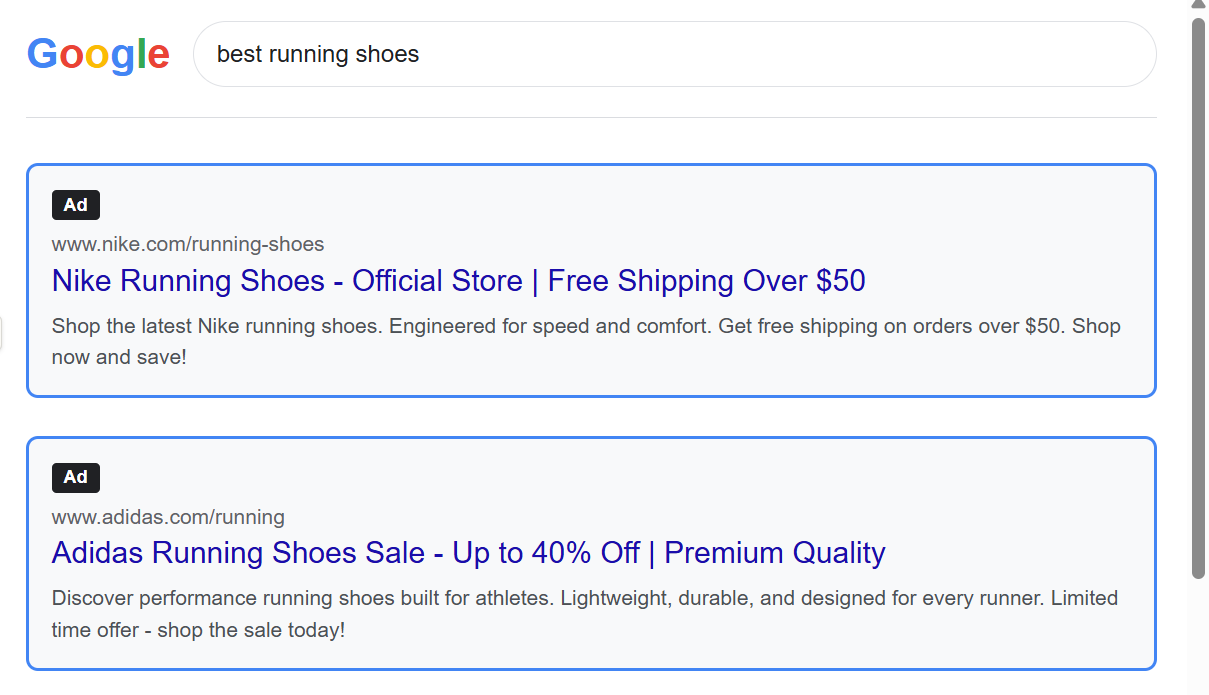
Here’s what I learned Google Ads is great for:
- Capturing people ready to buy or take action
- Service-based businesses where people search for solutions
- Products that people actively look for online
- Reaching people at the bottom of the sales funnel
On the other side, you’re competing with advertisers for those same search terms, which can make clicks expensive.
But the quality of those clicks is usually much higher because of that search intent.
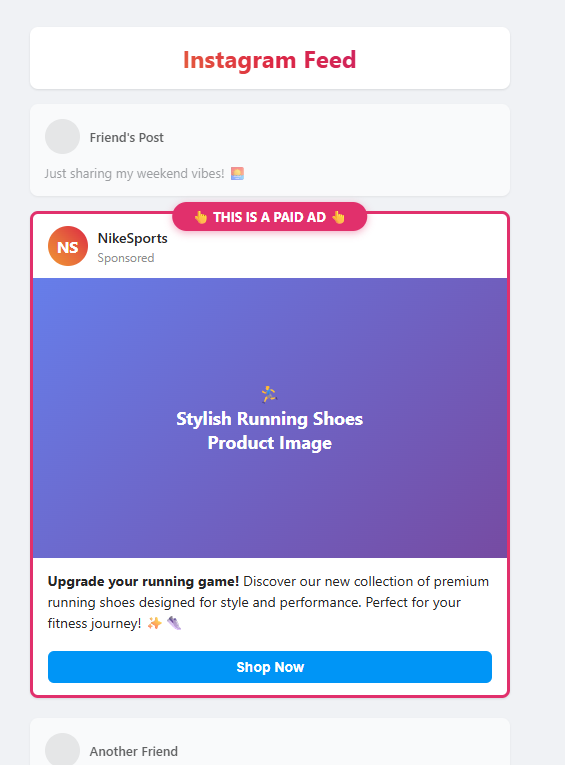
What Are Social Media Ads?
Social media ads, including Facebook and Instagram advertising, work completely differently from Google Ads.
These platforms use a PUSH MARKETING STRATEGY. You’re pushing your message in front of people who aren’t necessarily looking for you.
What I discovered is that social media ads are incredibly powerful for BUILDING AWARENESS and CREATING DESIRE. You can show people products they didn’t even know they needed.
For example, you might not searching for “cute plant pots,” but when you see a beautiful ad on Instagram showing trendy plant pots in a gorgeous living room, suddenly you want them.
That’s the power of visual storytelling and creating demand.
Here’s what I learned social media ads excel at:
- Building brand awareness among new audiences
- Showcasing visually appealing products
- Targeting specific demographics and interests
- Creating demand for products people don’t search for
- Engaging people earlier in their buying journey
The challenge with social media ads is that people aren’t in “buying mode” when they see your ad. You need to grab attention quickly and create enough interest to pull them away from their scrolling.
Google Ads vs Meta Ads: Which is Better?
After understanding both Google Ads and Meta Ads (which includes Facebook and Instagram advertising), I can confidently say: neither is universally better. They’re just different tools for different jobs.
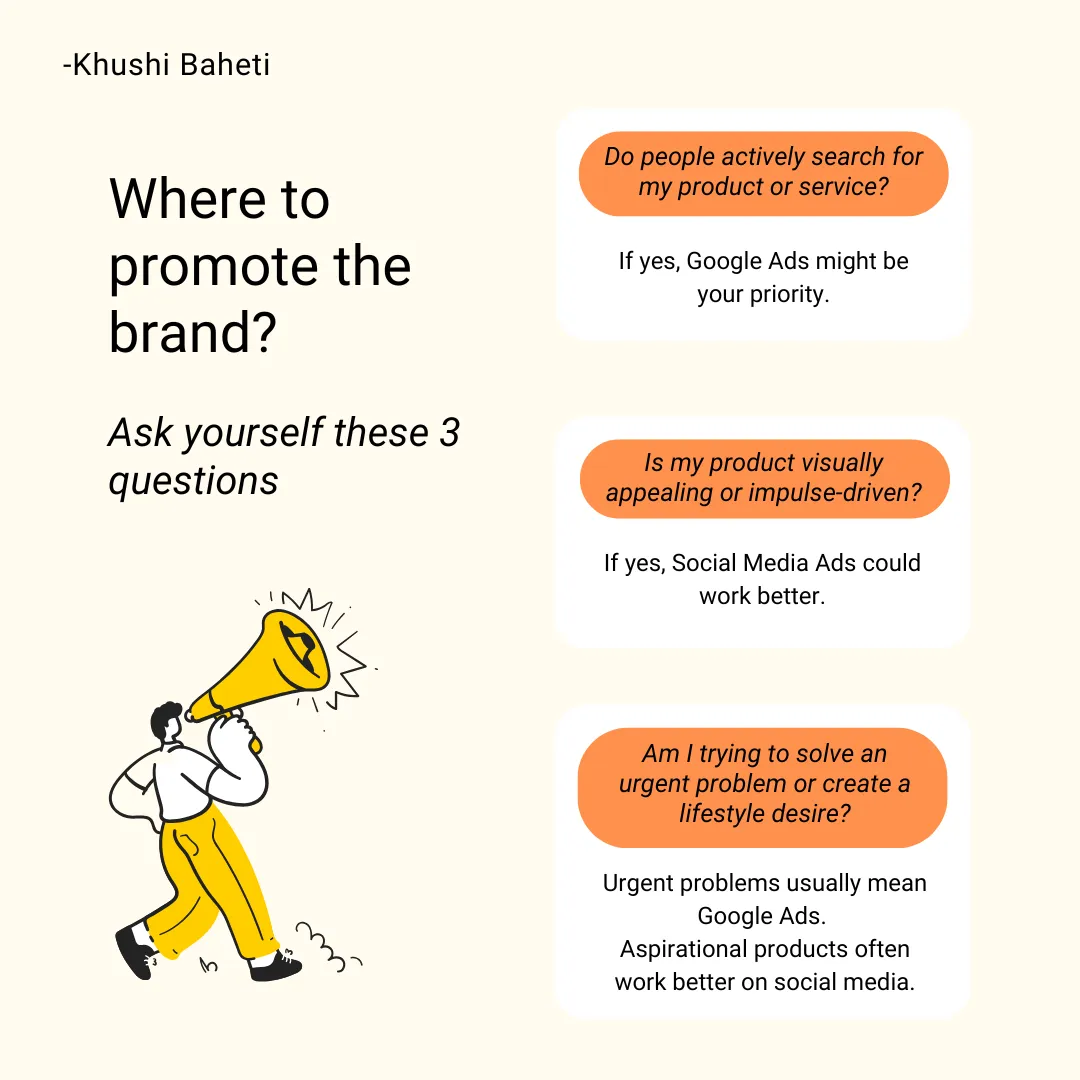
Google Ads wins when:
- You want HIGH-INTENT traffic
- People are actively searching for solutions
- You need immediate results from ready-to-buy customers
- You’re in a competitive niche where search volume exists
Meta Ads win when:
- You’re building a brand from scratch
- Your product is new or trendy
- Visual content is central to your appeal
- You want detailed demographic targeting
- You’re nurturing long-term customer relationships
The platform that’s “BEST” is the one that matches your BUSINESS GOALS and your CUSTOMER’S INTENT.
My Final Learning
After all my experiments and learning, here’s the core insight:
Ads success isn’t about choosing the “best” platform—it’s about understanding where your customers are and what mindset they’re in.
Google Ads connects you with people who are actively looking.
Social media ads introduce you to people who might not know they need you yet.
Both are valuable, but they serve different purposes in your marketing strategy.
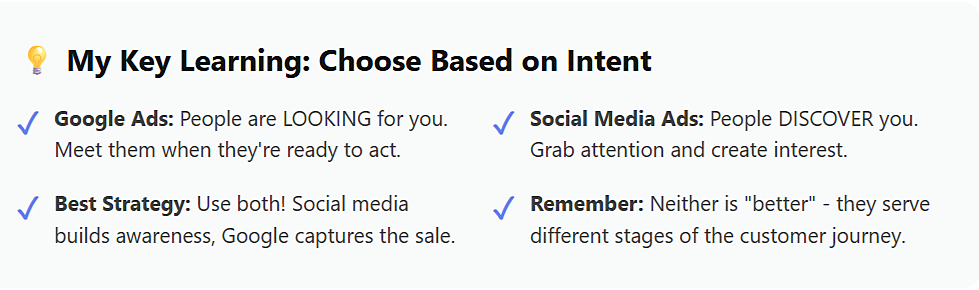
Start with one platform, learn it well, test your campaigns, and measure your results.
Once you’re comfortable, expand to the other platform to capture customers at different stages of their journey.
The beauty of digital marketing is that you don’t have to guess—you can test, measure, and improve.
That’s exactly what I’m still doing, and it’s made all the difference in my understanding of Google Ads vs social media ads.
Whatever you choose, remember: match your platform to your customer’s intent, and you’ll be way ahead of most beginners just starting out.
You may also read:
https://bahetibullish.in/digital-marketing-2026/